

Can Addicts In Recovery Safely Use Psychedelics?
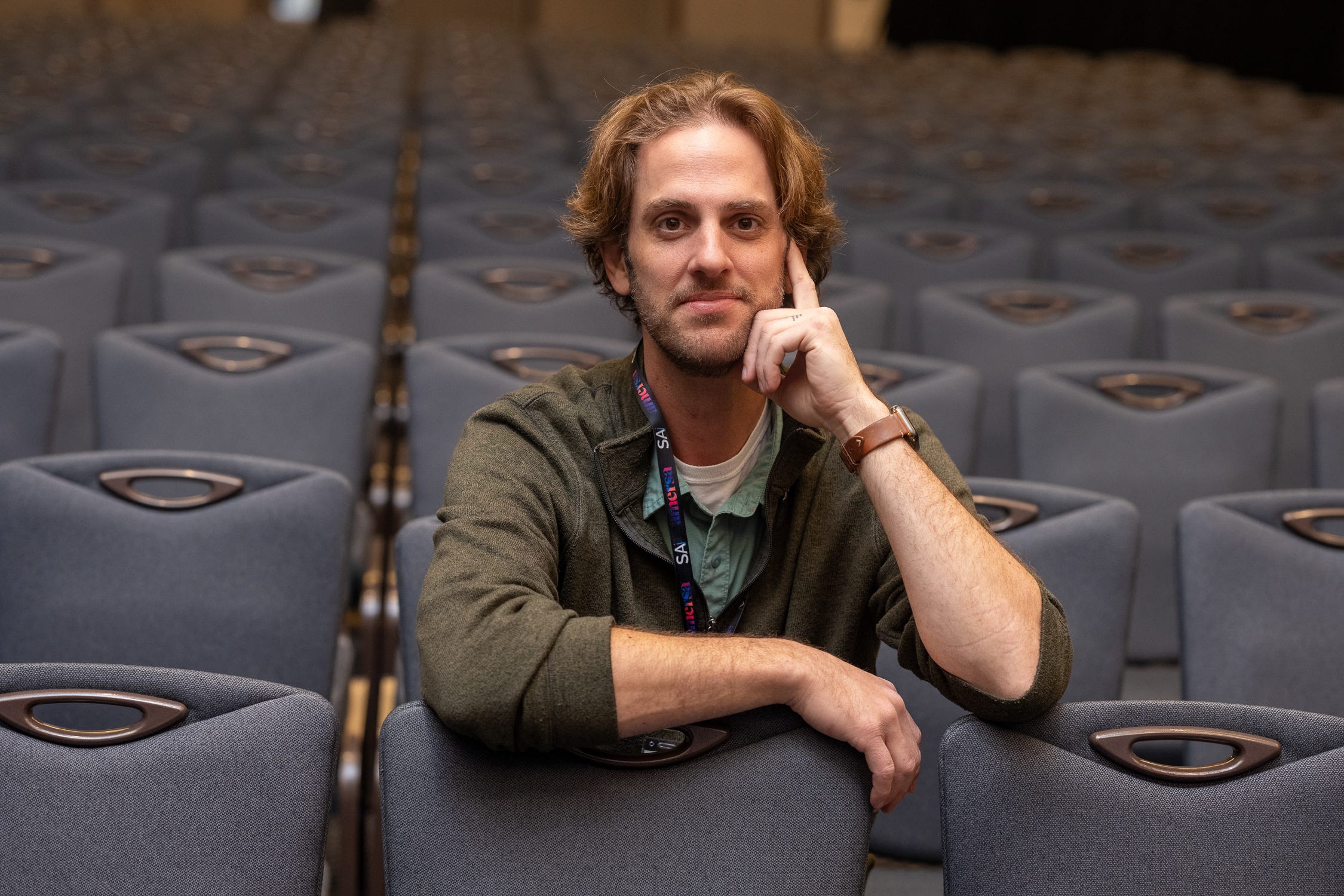
Kevin Franciotti and his group, Psychedelics in Recovery, offers a different path to Sobriety. Not everyone is down with this program...

Podcast/Audio Link here
Video below
Notes
A lot of people talk about the magic of mushrooms but master mycologist Paul Stamets does the research. A brand new randomized controlled study, sponsored by Stamets and a group of scientists, shows that a mix of Agarikon + Turkey Tail (adaptogenic, not psychoactive) mushrooms is a powerful adjunct to the Covid vaccine.
If you’re in Ojai, CA on Tuesday, Jan 27, come here me and Stephanie Karzon-Abrams discuss “Psychedelics For Creative Transformation and the Restoration of Ritual in Contemporary Life.” The talk is at 6:30. It’s free but space at the beautiful Hotel El Roblar is limited so grab a ticket here.
I had a wonderful interview with Francesa Rheannon, the award winning radio producer and host of the Writer’s Voice podcast. Among the many things we discussed: microdosing, mystical experience, emotional healing, policy battles, the stewardship of underground psychedelic community, and the deep spiritual questions these substances raise but don’t always answer.
This week’s post:
I’ve been lucky. I’ve never had to walk into a church basement, sit in a circle, and introduce myself as an addict in recovery. But I know plenty people who have and who have found salvation in those rooms, people for whom the program has became a lifeline when nothing else worked.
I also know people in those same rooms who have quietly explored psychedelics as part of their journey.
Kevin Franciotti lives at this crossroads. As co-founder and board president of Psychedelics in Recovery (PIR), he’s created a fellowship that honors the twelve-step framework while making space for psychedelic medicine. It’s not replacement therapy and it’s not abandoning the program. It’s an acknowledgment that healing doesn’t always follow a single script.
Franciotti’s story begins with opiate addiction and ibogaine. Where traditional recovery offered him a success rate of 5%-40% ,depending on who’s doing the measuring, ibogaine offered him a reset—not a cure, but a profound intervention that created space for another kind of work to begin. What emerged was a question that the recovery establishment has long resisted: What if the spiritual experience that Bill W. considered foundational to sobriety could be catalyzed by the very substances people have been taught to shun?
There’s a historical irony in this story too: Bill Wilson, AA’s co-founder, believed in this possibility of psychedelics. In the 1950s, inspired by research from Canadian psychiatrists Humphry Osmond and Abram Hoffer, Wilson experimented with LSD under clinical supervision. He was convinced it could offer alcoholics access to the spiritual breakthroughs that catalyze recovery. He even brought a proposal to the AA General Service Board recommending both LSD and niacin. (The board’s response? A resounding no).
The criticism PIR receives from traditional AA circles hasn’t softened much since Wilson’s day. The majority of AA members view any use of mind-altering substances—even psychedelics in therapeutic contexts—as fundamentally contradicting the principle of abstinence. Stories circulate of sponsors terminating relationships with sponsees who’ve explored psychedelics, and PIR members report being told to simply omit that part of their recovery story when sharing in traditional meetings. The resistance runs deep: in AA, sobriety means complete abstinence, full stop, and psychedelics represent the same kind of escape mechanism that got them into trouble in the first place. PIR advises members to exercise personal discretion when discussing their psychedelic experiences in mainstream recovery circles—a necessary caution when the stakes could cost them the very community that’s keeping others alive.
As an outsider looking in. I would never offer someone in recovery advice. I’m not qualified, and recovery is too important, too personal, too precarious, too BIG, for any outsider to impose their theories. But I am interested in the fact that PIR exists, that it’s growing, and that it’s creating space for people who find their higher powers in unexpected places.
What Franciotti has built isn’t an advocacy group for addicts to sample psychedelics. It’s a community that offers fellowship to people who are in the program and exploring these medicines but who don’t want to do it alone. PIR meetings follow twelve-step format—opening prayers, sharing, spiritual principles—but without espousing the hard and fast dogma that medicine and recovery can’t coexist. He explains this in detail in our interview.
Psychedelics aren’t a free pass, and PIR doesn’t pretend they are. The risk of relapse remains real. But for some, these experiences open doors that years of meetings can’t. It’s possible that this is what Bill W. intuited all those years ago when the board shut him down: that spiritual awakening comes in forms we can’t always predict.
As far as links:
PIR Meetings: https://www.psychedelicsinrecovery.org/online-meetings/
PIR Readings: https://www.psychedelicsinrecovery.org/member-materials/
Blog post re: study: https://www.psychedelicsinrecovery.org/when-community-leads-the-science/
Direct link to study itself: https://www.tandfonline.com/doi/epdf/10.1080/02791072.2025.2583960?needAccess=true
Socials:
https://www.linkedin.com/company/psychedelics-in-recovery-pir/
The answer is an emphatic, enthusiastic YES. Psychedelics=mysticism. Mysticism=awakening.
Awakening=becoming ever more your most authentic, devout self.
Losing fear, letting go of hang-ups, forgiving yourself and everyone else, embodying the truths that otherwise remain merely intellectual.
I could go on and on.
And I still go to AA. It has been and continues to be one of the most transformative experiences in my life.
I just don’t “share” about my mushroom and acid and Molly experiences, except outside “the rooms.”
Brilliant piece on such a nuanced topic. The tension betwen PIR and traditional AA mirrors the broader mental health debate where rigid adherence to one modality can miss that healing isn't linear. I've seen friends feel guilty for even considering alternatives. What's interesing is how Bill W's own LSD experience gets erased from the AA origin story.