

A Visit to The Shulgin Lab: Birthplace of the Underground Psychedelic Movement
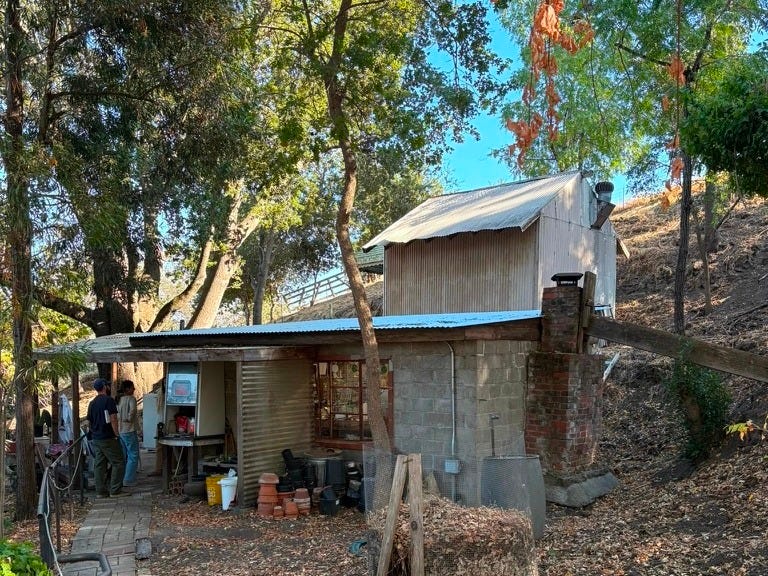
In this humble lab in his backyard, Alexander Shulgin created over 200 new psychedelics -- and publishing the recipe--at the very same time the DEA was ramping up the War on Drugs. Only in America...

EVENTS
NOV 5, 6:30-8PM, ELIXIR BAR AT THE ALCHEMIST’S KITCHEN, 117 Crosby Street, NYC. Grab a ticket here!
NOV 19, 6:45-8PM, OLD STONE HOUSE, 336 3rd Street, Brooklyn, NY. “Modern Psychedelics for Health and Healing. This event is free; books will be available for purchase.
NOV 22 (my birthday!), 4PM BUREAU OF GENERAL SERVICES—QUEER DIVISION, the 2nd floor of The LGBTQ Community Center, 208 W. 13th St. NYC “Healing, Pleasure, and Play: A Queer Take on Psychedelics” with Marco Calvani, director of the film, High Tide and co-star of the hit Netflix series, The Four Seasons. Grab a ticket here.
UPCOMING MICRODOSING COURSE
In recent weeks a number of people have asked me to form an online Microdosing Group. I’m creating a 6-week program that includes reading, shared activities and additional resources. If you are interested in joining, please let me know by responding in the chat here and we can continue the conversation on Signal.
Alexander Shulgin and the Birthplace of the Psychedelic Underground
In 1968 the strategy behind the newly hatched War on Drugs was to make drugs harder to get and produce. The DEA put LSD’s source material, ergotamine, on its watch list and tracked it with military precision. But even that close level of scrutiny didn’t stop underground chemists from pumping out a steady supply, the quality dependent on their skills. Some renegade chemists sought to turn a profit; but the most productive of them viewed spreading the benefits of psychedelics as a social calling. All of these chemists did their work clandestinely and on the run. All but one: Dr. Alexander Shulgin.
During the darkest half century of psychedelic repression, Sasha as he was known to his friends, operated as a one-man psychopharmacological research facility in full sight of the law. Hamilton Morris called Shulgin “the most important psychedelic chemist who has ever lived.” The sheer output of his work – 300 scientific papers, patents and books on the chemistry and pharmacology of the compounds he invented – affirms that appraisal.
Shulgin began his career in the 1950s at Dow Chemicals. After developing a money minting biodegradable insecticide, he was given the customary one dollar bill for the patent but granted free rein to research whatever he liked. In 1960, he took 400mg of mescaline, which “unquestionably confirmed the entire direction of [his] life.” He and Dow parted ways in 1966 but in the ensuing years, the 6’5” white-haired wizard who was famous for his good cheer and sense of humor, synthesized over 234 psychedelic compounds in the DEA-licensed lab he built in a cottage behind his property in Lafayette, California.
The key word in the previous sentence is “licensed.” In exchange for being an expert witness (usually for the defense) in drug related trials, Shulgin was granted a DEA research license. He consulted to chemical companies, gave pharmacology lectures to drug agents – he even authored the definitive reference book on controlled substances for law enforcement – all the while creating new substances, which he tested on himself, his wife, the Jungian psychotherapist Ann Shulgin, and their “research group” of close friends. In case of a dangerous reaction Shulgin kept an anticonvulsant on hand, which he used only twice, both times on himself

Of the substances he created, Shulgin’s favorite was 2C-B, which he described as “potent, warm, corporeal and associative.” But the one that made the most noise was MDMA.
MDMA had been discovered in 1912 but had been relegated to history’s dustbin. According to legend, in 1976 a student suggested to Shulgin that he resynthesize it as an alternative to MDA, which the government had put into Schedule 1. Shulgin devised a faster synthesis and he tried it on himself. It was instant love. He introduced it to his group, which included a hundred or so West Coast therapists who began MDMA assisted psychotherapy with patients. Short acting, music enhancing and love inducing, MDMA quickly jumped from the couch and into clubs where it was renamed Ecstasy and fueled the rave scene. It remains the world’s most widely used illegal drug.
Shulgin danced the line between the legitimate and the illicit but he consistently led with quality science. He described himself as a toolmaker: his instruments allowed people to explore corners of their minds. He was also passionate about the rights of individuals to investigate consciousness without interference. The banning of MDMA as a therapeutic agent was a key motivator behind his writing and self-publishing PiHKAL, A Chemical Love Story (PiHKAL stands for “Phenethylamines I Have Known And Loved”) in 1991. The 978 page, 2.87 pound tome is as eccentric and charming as Shulgin himself. It is divided into two sections. “The Love Story” is a thinly fictionalized account of Sasha’s and Ann’s love affair with each other and drugs. “The Chemical Story” is not a story, but descriptions of 179 phenethylamines – mescaline, 2-CB, and MDMA, the most famous among them – each including “qualitative comments,” dosage recommendations, and detailed instructions for synthesis.
It took the DEA two full years to realize that Shulgin had made public a cookbook to the very substances they were battling to control. In retaliation, agents raided Shulgin’s lab, trampling his precious collection of small peyote cactuses in the fracas. They found no violations (they couldn’t arrest him for chemicals found on the shelves that had not yet been named or declared illegal!) but they revoked his DEA license and levied a $25,000 fine. (Donations from friends and admirers covered the full amount)
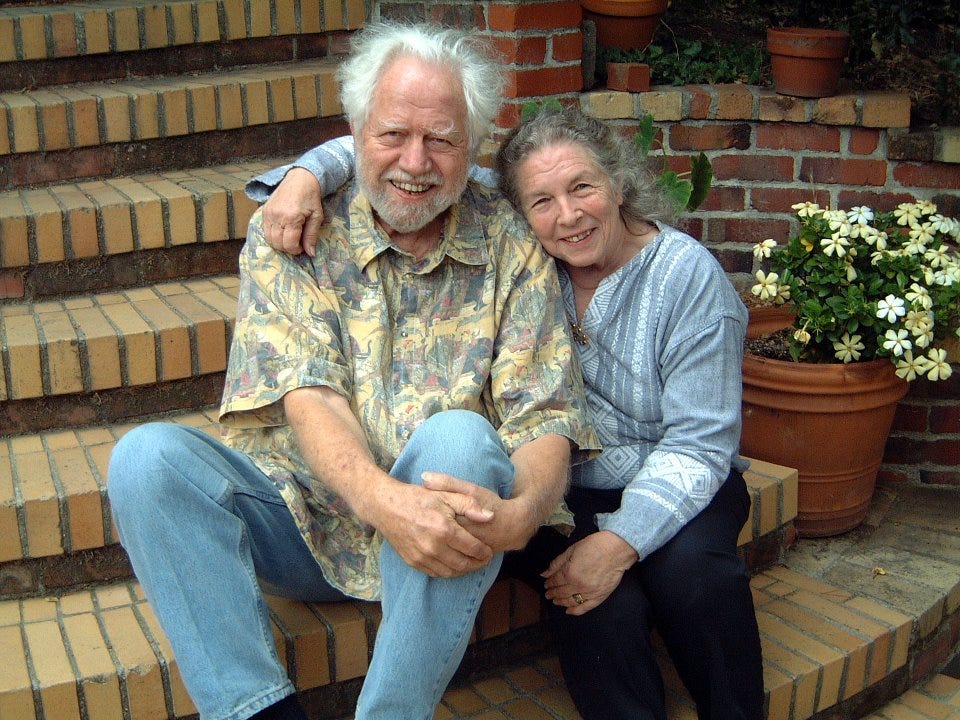
.To the Shulgins the clampdown was politically motivated. In 1997 they struck back in their ever gracious way by publishing a second volume, TiHKAL (Tryptamines I Have Known And Loved), which was similarly structured: Book 1 contained essays by Sasha and Ann; Book 2 included recipes for 55 tryptamines including psilocybin, DMT, 5 MeO-DMT, and bufotenin. The last section, entitled Tryptamina Botanica, included indices to hundreds of plant alkaloids found in nature.
Though it wasn’t his intention to become an anti-establishment folk hero, it’s difficult to overstate Shulgin’s impact on psychedelic drug culture. Within months of his announcing a new discovery, underground chemists scrambled to pump out gray market versions. For many, those drugs reaped millions of dollars, but Shulgin never made a penny from sales. He remained committed to keeping his discoveries available for educational purposes. When a friend once recommended he hire offshore chemists to test compounds more quickly, he replied, “Oh, but thinking of new molecules – then creating them – are the greatest delights. One would miss all the fun.”
By his death in 2014 at age 88 Shulgin estimated he had taken 4,000 psychedelic journeys. In 2015 the British Journal of Psychiatry devoted a special edition to him and Ann; that same year the British Parliament made every substance he listed in PiHKAL illegal in one legislative swoop.
“Our generation is the first, ever, to have made the search for self-awareness a crime if it is done with the use of plants or chemical compounds as the means of opening the psychic doors. But the urge to become aware is always present, and it increases in intensity as one grows older.”--Alexander Shulgin, PiHKAL

Below is my guerilla video tour of the lab today including two 15-minute lectures from Paul Daly and Mark Martini, chemists who worked by the master’s side. You’ll hear about Sasha’s MDMA’s early synthesis from essential oils of nutmeg, as well as his “Smart Pill Undepressants” otherwise known as “Compounds That Increase the Capacity For Mental Work in Humans.” In the video Mark Martini describes them as “kind of like a microdose feel….like you slept well, your really good friend’s in town, but it taps out right around there.” I’m not a chemist but I could listen to these tales all day. And hope to get back to Shulgin Foundation to hear more.
The Shulgin Foundation is a nonprofit dedicated to keeping the master’s legacy alive. If you have the means please consider donating.